


Why Real-Time Business Data Matters for Better Business Decisions
Introduction
Businesses today operate in an environment where conditions can change within minutes. Customer expectations, operational requirements, market conditions, and resource availability can shift quickly. When decision-makers rely on outdated reports or delayed information, they may miss opportunities or respond to problems too late.
This is why real-time business data has become increasingly important.
Real-time data gives businesses access to current information about their operations, performance, assets, and customers. Instead of waiting for daily, weekly, or monthly reports, managers can monitor important activities as they happen and take action based on what is happening right now.
For businesses managing vehicles, field operations, logistics, fuel consumption, or distributed teams, real-time information can be particularly valuable. Technologies such as GPS tracking, telematics, fuel monitoring, vehicle sensors, and connected dashboards allow organizations to turn operational data into actionable insights.
In this article, we explore why real-time business data matters, how it improves decision-making, and how organizations can use it to improve efficiency, visibility, and long-term business performance.
What Is Real-Time Business Data?
Real-time business data is information that is collected, processed, and made available with minimal delay. It enables businesses to understand current conditions rather than relying entirely on historical information.
For example, a business may use real-time data to monitor:
- Vehicle locations and movement
- Fuel levels and consumption
- Driver and vehicle activity
- Asset utilization
- Delivery and field-service operations
- Operational performance
- Equipment status
- Customer or service activity
- Key performance indicators (KPIs)
The exact information available depends on the technology and systems used by the organization.
How Real-Time Data Works
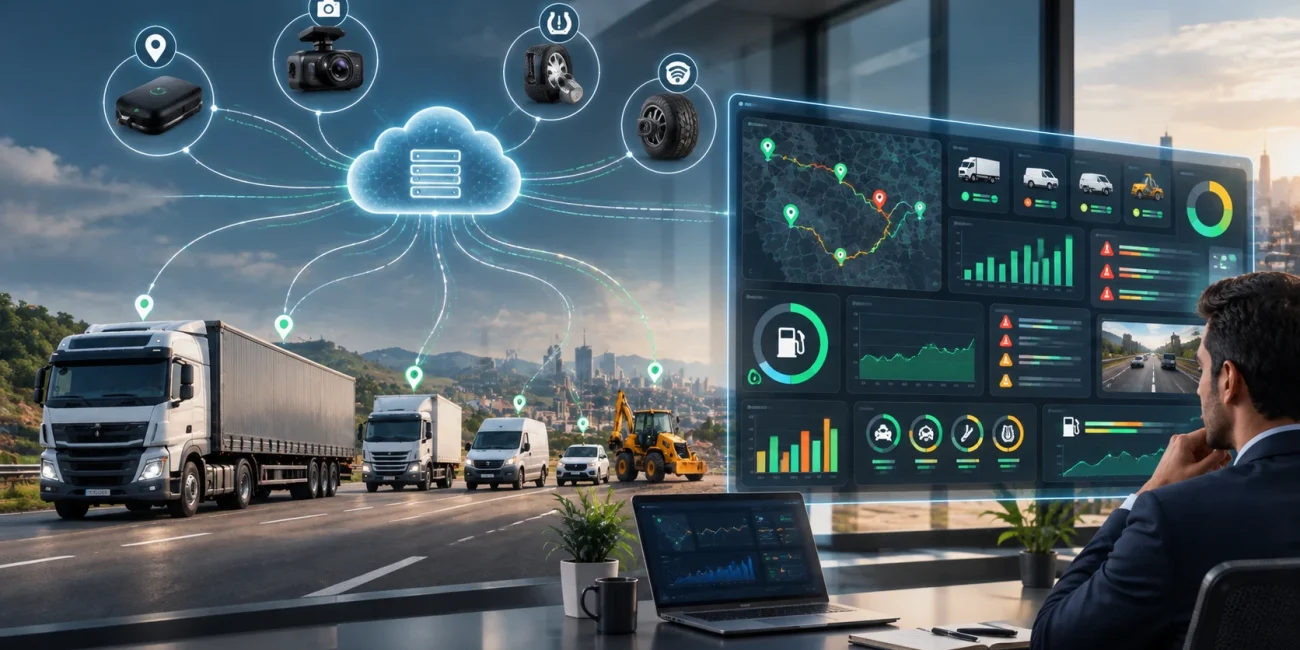
Modern connected systems can collect information from multiple sources, including GPS devices, vehicle sensors, telematics systems, business applications, and other connected devices.
The information is transmitted to a centralized platform where it can be processed and displayed through dashboards, alerts, reports, or monitoring tools.
This creates a continuous flow of information:
Data collection → Data processing → Real-time visibility → Action → Improved decision-making
The value is not simply in collecting more data. The real advantage comes from making relevant information available to the right people at the right time.
Why Timely Information Matters
Traditional reporting can provide valuable historical insights, but historical information does not always explain what is happening at the present moment.
Consider a fleet manager who discovers at the end of the month that several vehicles have been consuming more fuel than expected. The report may identify the problem, but the opportunity to address unnecessary fuel consumption earlier has already been lost.
With real-time monitoring, unusual fuel consumption or vehicle activity can potentially be identified much sooner.
Timely information allows businesses to:
- Identify operational issues earlier
- Respond to changing conditions faster
- Monitor important activities continuously
- Reduce avoidable delays
- Improve resource allocation
- Support more informed decisions
- Detect unusual activity
- Improve operational accountability
How Real-Time Data Improves Business Decision-Making
Accurate and timely information provides decision-makers with a clearer picture of current business conditions.
Instead of making decisions based primarily on assumptions or outdated reports, managers can use current operational information to evaluate situations and determine the appropriate response.
Faster Responses to Business Challenges
Operational problems can occur at any time. A vehicle may experience an unexpected delay, fuel consumption may increase, equipment may require attention, or a field team may deviate from an expected schedule.
Real-time visibility helps businesses identify such situations sooner.
This can allow teams to:
- Investigate operational problems quickly
- Respond to unexpected delays
- Escalate important issues when necessary
- Take corrective action before problems grow
- Keep customers and stakeholders better informed
The result is a more responsive operating environment.
Better Strategic Planning
Real-time data is not only useful for day-to-day operations. It can also support long-term planning.
When businesses continuously monitor performance, they can identify recurring patterns and trends. These insights can help management evaluate whether existing processes, resources, and strategies are delivering the expected results.
For example, historical and real-time operational data can help businesses determine:
- Which assets are being used most effectively
- Where operational bottlenecks occur
- Which processes require improvement
- Where resources may be underutilized
- Which areas could benefit from automation or technology
Combining current information with historical trends creates a stronger foundation for strategic planning.
Enhancing Operational Visibility
One of the biggest advantages of real-time business data is improved operational visibility.
Without centralized visibility, managers may need to rely on phone calls, spreadsheets, manual updates, or separate systems to understand what is happening across the organization.
Real-time dashboards can bring important information together in one place.
Monitoring Business Performance
Businesses can monitor selected KPIs and operational activities continuously rather than waiting for periodic reports.
Depending on the industry, organizations may track:
- Fleet utilization
- Vehicle movement
- Fuel consumption
- Delivery progress
- Asset activity
- Operational productivity
- Downtime
- Service performance
- Resource utilization
Having these insights readily available makes it easier to identify deviations from expected performance.
Increasing Transparency Across Teams
Real-time information can also improve communication between departments.
When teams have access to consistent information, they can work from the same operational picture instead of relying on different reports or assumptions.
Greater visibility can support:
- Better coordination
- Faster communication
- Improved accountability
- Consistent reporting
- More effective collaboration
Supporting Business Efficiency
Efficiency is a key factor in controlling costs and supporting sustainable business growth.
Real-time data can help organizations understand where time, money, fuel, equipment, and human resources are being used.
Reducing Delays and Inefficiencies
Operational bottlenecks are often easier to identify when businesses have current information.
For example, real-time monitoring can help reveal unusual delays, excessive idle time, inefficient routes, underutilized assets, or unexpected operational activity.
Once these patterns are identified, businesses can investigate the underlying causes and improve their processes.
Potential benefits include:
- Reduced operational delays
- Better route and resource planning
- Improved asset utilization
- Faster issue identification
- Reduced unnecessary activity
- More efficient workflows
Improving Resource Utilization
Businesses have limited resources. The challenge is to ensure those resources are being used where they provide the greatest operational value.
Real-time information can help managers understand current resource requirements and make adjustments accordingly.
For organizations operating fleets or field teams, this may include monitoring vehicle availability, utilization, locations, and operational status.
Better visibility can help reduce situations where resources are unnecessarily idle or allocated inefficiently.
Real-Time Data for Fleet and Vehicle Operations
Real-time business data is particularly valuable for organizations that operate commercial vehicles and mobile assets.
A fleet generates a significant amount of operational information. GPS tracking, telematics, vehicle sensors, fuel monitoring systems, and connected devices can provide insights into vehicle activity and performance.
Fleet managers can use real-time information to monitor:
- Vehicle location
- Trip activity
- Route progress
- Fuel levels
- Fuel consumption
- Vehicle utilization
- Driving behavior
- Vehicle status
- Operational exceptions
This information can help fleet operators improve visibility and make faster operational decisions.
For example, if a vehicle is delayed or operating outside an expected route, a fleet manager can investigate the situation rather than discovering it much later through a report.
Improving Fuel Management
Fuel is a major operating expense for many vehicle-based businesses. Monitoring fuel consumption only through periodic reports can make it difficult to identify unusual activity quickly.
Real-time fuel monitoring can provide greater visibility into fuel levels and consumption patterns.
Businesses can use this information to:
- Monitor fuel usage
- Identify unusual consumption patterns
- Compare fuel performance between vehicles
- Investigate potential fuel losses
- Improve fuel-related accountability
- Support more accurate operational reporting
When fuel data is combined with vehicle and trip information, managers can gain a more complete understanding of fleet performance.
Improving Customer Service
Real-time information can also contribute to a better customer experience.
Customers increasingly expect accurate updates and reliable service. Businesses that can see the current status of their operations are better positioned to provide meaningful updates.
For example, logistics and field-service businesses can use operational information to understand the progress of vehicles and assignments.
This can help organizations:
- Provide more accurate status updates
- Respond to customer questions faster
- Manage delays more effectively
- Improve service coordination
- Build greater customer confidence
Key Benefits of Real-Time Business Data
When implemented effectively, real-time business data can provide several important advantages:
1. Faster Decision-Making
Managers can make decisions using current operational information instead of waiting for delayed reports.
2. Greater Operational Visibility
Real-time dashboards provide a clearer view of business activities, assets, and performance.
3. Improved Efficiency
Organizations can identify bottlenecks and inefficient processes more quickly.
4. Better Resource Utilization
Current information helps businesses allocate vehicles, equipment, employees, and other resources more effectively.
5. Early Problem Detection
Real-time alerts and monitoring can help identify unusual activity or operational problems sooner.
6. Improved Accountability
Consistent and accessible information can improve transparency across teams and departments.
7. Better Strategic Planning
Real-time information combined with historical trends provides a stronger foundation for future planning.
8. Improved Customer Service
Better operational visibility allows businesses to respond to customers with more accurate and timely information.
Best Practices for Using Real-Time Business Data
Simply collecting real-time data does not automatically improve business performance. Organizations need to ensure that the information they collect is accurate, relevant, accessible, and connected to clear business objectives.
Define Clear Objectives
Start by identifying the business problems you want to solve.
Rather than collecting every available data point, focus on information that supports measurable objectives such as reducing fuel costs, improving fleet utilization, reducing delays, or increasing productivity.
Focus on Data Accuracy
Poor-quality data can lead to poor decisions.
Businesses should use reliable systems and establish processes for monitoring data quality. Accurate information is especially important when operational decisions depend on automated alerts or dashboards.
Centralize Important Information
A centralized platform can make it easier for managers to access information from different sources.
Bringing relevant data together can reduce the need to switch between multiple systems and can provide a more complete view of operations.
Use Dashboards and Alerts Effectively
Dashboards should focus on the information that decision-makers actually need.
Too much information can make it difficult to identify important issues. Businesses should prioritize meaningful KPIs and configure alerts for events that require attention.
Combine Real-Time and Historical Data
Real-time information shows what is happening now, while historical data helps explain patterns and trends.
Using both types of information can provide a more complete understanding of business performance.
Turn Insights Into Action
The ultimate value of real-time data comes from acting on the insights it provides.
Organizations should establish clear processes for responding to alerts, investigating exceptions, and making operational improvements.
How Businesses Can Get Started
Businesses that are new to real-time monitoring do not need to transform every process at once.
A practical approach is to start with one important operational area.
For example:
- Identify a business challenge.
- Determine which data is needed to understand the problem.
- Select suitable monitoring technology.
- Establish measurable KPIs.
- Create dashboards or alerts.
- Monitor performance consistently.
- Evaluate the results.
- Expand the solution to other areas where it can create value.
This approach allows organizations to demonstrate value while gradually building a more connected and data-driven operation.
The Future of Real-Time Business Intelligence
As connected devices, cloud platforms, telematics, automation, and analytics continue to develop, access to real-time information is becoming increasingly practical for businesses of different sizes.
The future of business intelligence is not simply about having more data. It is about making useful information available quickly and turning that information into meaningful action.
Organizations that combine reliable data with effective processes can improve operational control, respond faster to change, and make more confident decisions.
Frequently Asked Questions
Conclusion
Real-time business data has become an important resource for organizations seeking better visibility, efficiency, and decision-making.
By providing current information about operations, assets, performance, and business activity, real-time data enables managers to identify problems earlier, respond faster, optimize resources, and improve operational processes.
For businesses managing fleets, vehicles, fuel, field operations, and connected assets, technologies such as GPS tracking, telematics, fuel monitoring, and vehicle sensors can provide valuable real-time insights.
However, technology alone is not enough. Businesses need clear objectives, accurate data, useful dashboards, and defined processes for turning insights into action.
When these elements work together, real-time business data can become more than a reporting tool—it can become a foundation for smarter operations and sustainable business growth.
Make Better Decisions With Real-Time Business Insights
Don’t wait for outdated reports to understand what’s happening across your business. With real-time GPS tracking, fleet monitoring, fuel management, and telematics solutions, you can gain greater visibility, improve operational efficiency, and respond to issues faster.
Ready to take control of your business operations? Explore SpectaMeta’s real-time monitoring solutions and discover how better data can support smarter business decisions.
